


Insect-inspired Art from The Entographic Collective
Bridget BAILEY | Laura BENETTON | Tracey BUSH | Emily CARTER | Tess CHODAN | Louisa CRISPIN | Arlette ESS | Sarah GILLESPIE
Fleur GRENIER | Katy HARRALD | John LAMERTON | Peter SMITHERS | Lucy SYLVESTER | Rhea THIERSTEIN | John WALTERS | KT YUN

BATH ROYAL LITERARY AND SCIENTIFIC INSTITUTE
2 – 25 FEBRUARY 2026
Mon–Sat 10am–4pm | Admission Free
Delicate fabric flies and phantom etched moths fly alongside other exotic artworks from The Entographic Collective – a group of artists with a passion for insects. This unique exhibition features the work of sixteen artists across a range of disciplines including painting, drawing, printmaking, sculpture, installation, glass, textiles, and mixed media.
Art that explores a world of intricate and complex beauty, inspiring a fresh rapport with the smaller champions of the natural world and a deeper understanding of the vital role they play in maintaining our planet.


Bath Royal Scientific and Literary Institution, Queen’s Square, Bath BA1 2HN

Tess Chodan
Tess Chodan is a British artist who creates artworks using antique insect specimens from historical collections: butterflies, moths, beetles, dragonflies and honeybees. She painstakingly repairs and restores specimens from collections that are anywhere from 40 to 130 years old, and combining them with antique objects and textiles, creates framed and 3D artworks. Her work celebrates the tradition of collecting, reflects on memory and preservation, fragility and time, and is inspired by a deep connection with the natural world.

Katy Harrald
Katy Harrald is a traditional pencil artist based in Purbeck, Dorset. She creates highly detailed graphite works celebrating the diversity and beauty of British nature full of movement and drama. Utilising graphite’s ability to produce complex detail and atmosphere. After studying for a Ba (Hons) Illustration at Art’s University Bournemouth, she has gone on to make work for books, magazines, charitable organisations, editorial and commercial projects; and solo exhibitions.

Rhea Thierstein
Rhea Thierstein is a British multidisciplinary artist fascinated by the tiny, often overlooked creatures that live alongside us. Rooted in a deep connection to nature, her handcrafted practice magnifies these small wonders, encouraging viewers to pause, look closer and reconsider their importance. Working across installation, sculpture, photography and immersive design, she uses everyday materials to transform insects and other natural forms into poetic, narrative-driven works that evoke curiosity and care. Her collaborations include the Natural History Museum, the V&A Museum, Hermès, and Selfridges, with exhibitions at Somerset House, Mall Galleries, and The Salisbury Museum.

Lucy Sylvester
Lucy’s love of the British countryside started as a child; her pockets often filled with seed heads and feathers. Her love of the natural world and collecting has continued, her woodland finds are now displayed in her Oxfordshire studio, hanging from the walls and stored in old science jars. Lucy believes you cannot compete with the beauty of nature, its perfect lines and textures, so uses it as directly as possible. Taking moulds from her delicate finds, she casts into the cavity they leave, allowing her to create exact replicas of life in solid silver and gold.

Louisa Crispin
Lost in a world of intricate observations from nature, Louisa is entranced by the cycle of growth and decay. It’s quiet in her Kent studio as she looks ever closer at the flora and fauna. Texture, shadows, silhouettes and movement created with graphite marks and tone, it’s rarely about the colour but always about the environment. Her drawings explore the materiality of medium whilst largely considering the plight of less popular insects. Aiming to encourage open discussion, the narrative is focused on wildlife corridors: the importance of a network of routes between habitats to broaden diversity and combat nature depletion.

Tracey Bush
Tracey Bush utilises paper with craft and fragility and is concerned with our increasingly depleted environment, in particular, the loss of insects. As part of the Entographica exhibition in Bath she will exhibit a large collection of hand-cut Butterflies, ‘British Butterflies’ made from vintage maps and atlases of Great Britain. Also in the exhibition are multiples made during a residency at the Centre for Fine Print Research at the University of the West of England in Bristol.

Peter Smithers
Peter is a biologist. He worked as an ecologist/entomologist at the University of Plymouth until he retired in 2013. Over his career he studied the ecology of spiders identifying each species by their unique genitalia. In his retirement he realised that these extremely small (0.1mm across) but complex structures held a strange surreal beauty, so returning to his love of painting he began a series of canvases depicting them as vibrant, complex and strangely beautiful structures. As an ecologist he sees these microscopic organs as a metaphor for the infinitely more complex but no less beautiful natural systems that surround us.

Sarah Gillespie
Sarah Gillespie makes mezzotint prints, an old, slow and painstaking method that produces unique velvet blacks and soft tones. Her work encourages us to refocus our gaze toward the everyday and the overlooked. Sarah’s works based on drawings of moths, insects and occasionally landscapes, have a ghostly quality, speak a little of the night, and are hugely effective at capturing something about their subjects’ struggles. Mezzotint, it seems, is perfect for achieving this.

Arlette Ess

John Lamerton
John’s starting point is always the real world, using his personal observations, books and photographs. His love of detail and vivid imagination then come into play to produce pen and ink images that are delicate, complex and intensely beautiful. Taking the natural patterns found in his subjects John builds a web of delicate traceries over the surface of each insect, transforming and enhancing their natural beauty. John’s aims to inspire a greater appreciation of these tiny and often overlooked creatures. John has exhibited at the Nature in Art Gallery, Gloucestershire and The Bug Farm, Pembrokeshire.

Emily Carter
Emily is an award-winning textiles designer and illustrator whose work centres on original hand-drawn studies of wildlife with a particular emphasis on entomology. Working traditionally with pen and paper, she creates detailed drawings that are available as originals and as limited-edition giclée prints produced with archival materials. Her illustrations feature throughout various natural history publications, including Insectarium and Insectile Inspiration, and her work focuses on documenting species with accuracy, presenting scientific illustration in a contemporary format through drawing and printmaking

Fleur Grenier
Fleur Grenier’s sculptural pewter work explores the beauty and complexity of the natural world, combining traditional metalworking techniques with contemporary design. Her ongoing series Home reflects on how all living beings from leaf cutter ants and honeybees to the shore crabs seek belonging, shelter, and connection. Fleur Grenier is one of only a few contemporary pewtersmiths working in the UK today. Introduced to pewter over thirty years ago while studying at Sir John Cass in London, she discovered a lifelong connection with the material that continues to shape her creative practice.

Bridget Bailey
Bridget’s insects combine her contrasting experiences of growing up on a farm and a career fashion. The results are artworks inspired by down-to earth observations from her allotment, created with the ethereal materials and the light touch of couture textile and millinery techniques. Dead flies and swarms of midges transform from unappealing to compelling, when made with such delicacy and respect. Those who’d normally step away lean closer; and in that moment is a fly as beautiful as a butterfly, and a beetle as beneficial as a bee?

KT Yun
KT Yun is a hot glass artist born and raised in the Scottish Highlands. KT discovered hot glass at art school in England aged just seventeen and has worked with glass ever since – specialising in glassblowing. In 2023 she was awarded a scholarship from the Queen Elizabeth Scholarship Trust. This incredible award has allowed KT to combine her glass making with her passion for entomology, the study of insects. She used the fund to explore new glass processes and has been working with other artists across different disciplines to develop the skills and techniques required to create insects in glass.

Laura Benetton
Laura Benetton is a London-based multidisciplinary contemporary artist working at the intersection of art and science. She studied painting at the Academy of Fine Arts in Venice and obtained a master’s degree in Art and Science from Central Saint Martins, London. Since 2016, she has worked from her studio in South London and collaborates with the Natural History Museum as part of her ongoing artistic and scientific research. Her practice is informed by phenomena such as bioluminescence and movement science. Generative in nature, her work spans a wide range of media including painting, performance, sculpture, light installation, and bio-art.

John Walters
John Walters is an artist and ecologist. He draws and paint wildlife directly from life in the field to capture the life and behaviour of his subjects. After graduating from Falmouth School of Art and Design in 1991 he worked for the Dartmoor National Park Authority as a graphic designer. Since going freelance in 1999 he works as an ecologist specialising in invertebrates, a wildlife artist and public speaker. He has worked with the BBC Natural History Unit and has won awards for his drawings and paintings, appearing in books, including ‘Devon – Wildlife Through the Seasons’ and ‘Bugs Britannica’.
The Entographic Collective are a diverse group of artists who have been inspired and enthused by the fascinating and incredible world of insects, taking their name from the study of insects – Entomology. They’re on a mission to change the negative public perception of insects. Often seen as an ugly nuisance or even feared, insects are undeserving of their reputation and could instead be recognised as small creatures of great beauty who play a vital role in maintaining life on our planet. Can art influence public attitudes and perceptions? The Collective believe that it can.
‘Entographica’ presents insect-inspired artworks from sixteen artists aspiring to raise awareness of insect diversity and ubiquity, their beauty and their strangeness. Using materials from paper to glass, graphite to cloth, the work embodies a diversity of approaches and interpretations of the shape, form and lives of insects, interpretations which reflect the broad spectrum of roles that insects play in nature. Using art as a gateway into the insect microcosm, the exhibition offers a glimpse of a world that exists below the level of human perception. A glimpse that will inspire wonder and curiosity, that will invoke empathy and appreciation, leading to a more positive relationship with insects and the wider natural world.
If you are interested in any of the Entographica artists you can connect with them via the links on their profile above or email The Entographica Collective at entographica@gmail.com for more information.
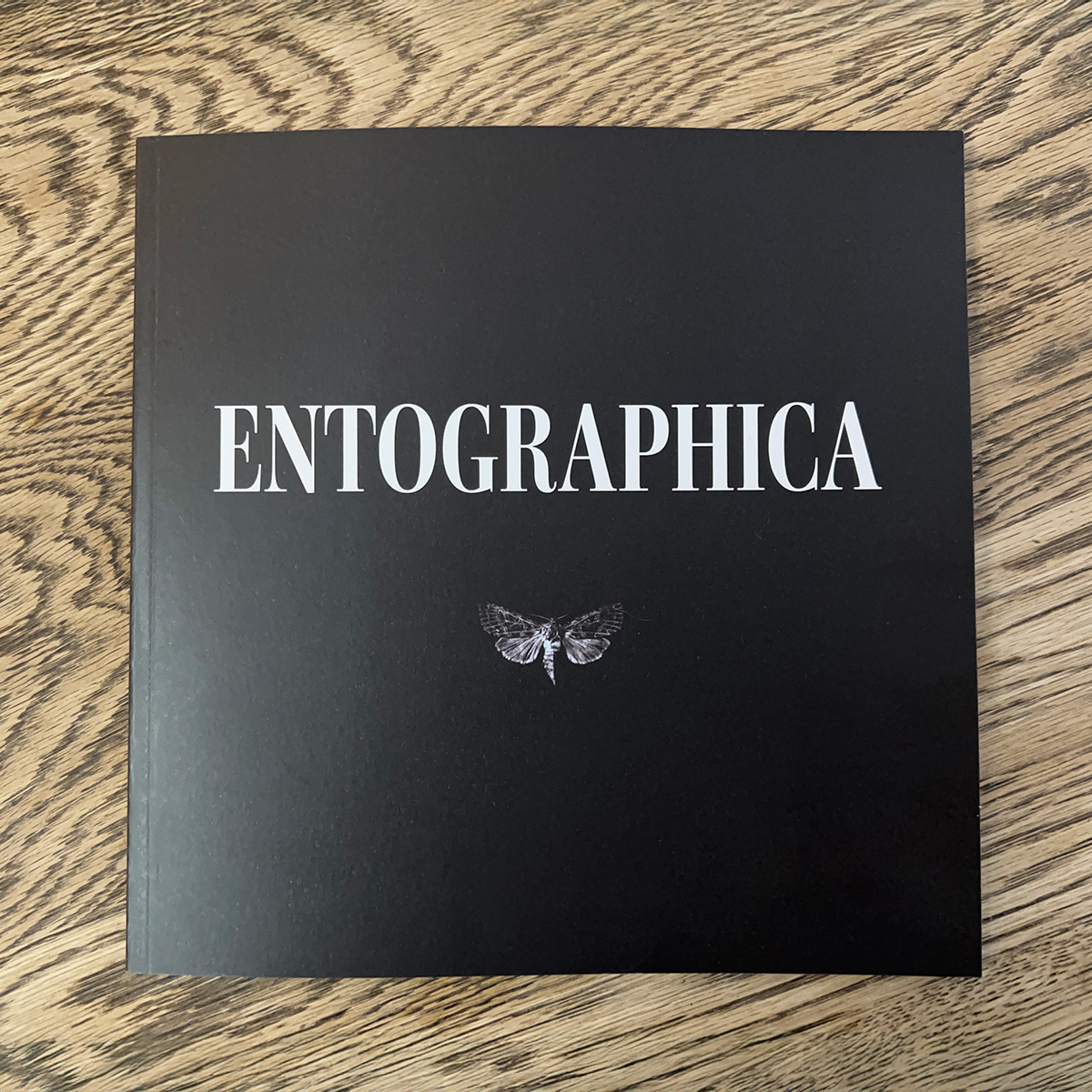
The catalogue to accompany the exhibition ‘Entographica’ can be purchased in person at The Bath Royal Scientific and Literary Institution, Queens Square, Bath for £10 until 25th February when the show closes.
We also have limited numbers available to purchase online for £14 including postage and packing. Click the link below for details.
With thanks to support from The Goodman Fund, The Royal Entomological Society – www.royensoc.co.uk
